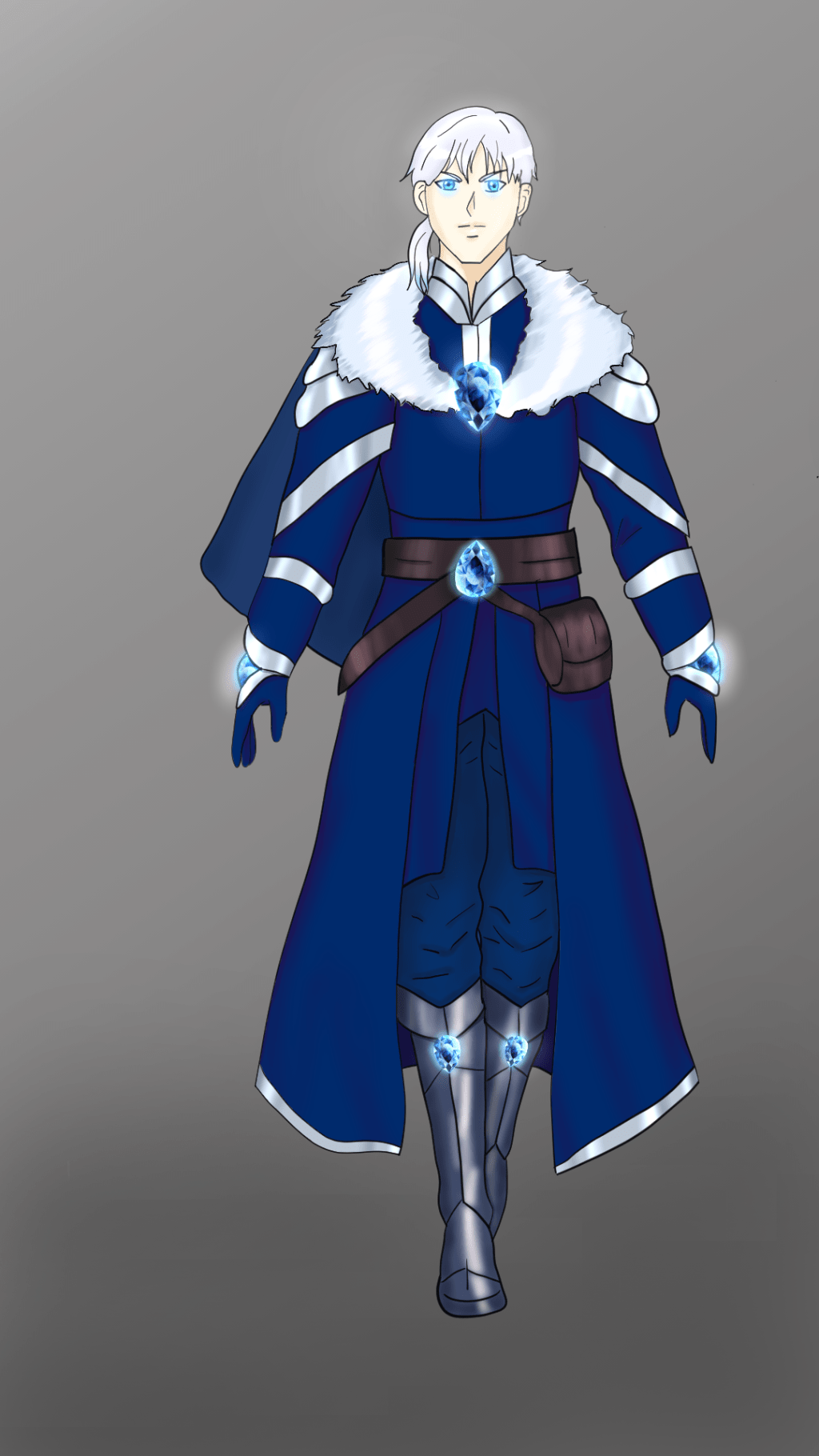
One thing I was sure of when I started writing Loyalty Fallen: I wanted my readers to feel a lot of tension when it finally came time to face the villains. To do that, I wanted to take some lessons from my favorite novels, movies, and TV shows and try to make them a reality. Here’s what I learned in that process.
1. Show a contrast in strength
Obviously, one of the main things that makes villains scary is simply making them strong. However, where I believe writers trip up is when the narrator or a minion just says that the villain is strong rather than showing that they’re strong. Even if one of the villain’s subordinates is terrified of the villain, that doesn’t tell you how strong the villain is, because you’re more likely to assume the subordinate is weak (as seems to be the case with all of the nameless subordinates in franchises like Star Wars.)
A way that I personally find more compelling is to set up a character or villain as powerful by showing them defeat several people, and then show the main villain deliver a resounding, humiliating defeat to that character. This is shown in the Mistborn trilogy (major spoilers for book one) as we see Kelsier defeat enemies and even an inquisitor against all odds, only to be soundly, almost pathetically trounced by the Lord Ruler.
Another example is from the Ranger’s Apprentice series from John Flanagan. Spoilers ahead for book nine, Halt’s Peril. In Halt’s Peril, Halt, who is known to be an incredible fighter and feels almost invincible from previous books, is poisoned by an assassin’s crossbow bolt. When his apprentice Will has to go up against that same assassin later, the tension is higher because we’ve already seen how dangerous and skilled this individual is.
In my own novel, Ren, who has shown to be a very competent fighter that takes on all comers, loses against Xian and is badly wounded for his troubles. This sets up any future encounter between them to be much more tense.
2. Show reactions to strength
Just like you can demonstrate the horrors of a scene in a movie without actually showing the gore just by showing the faces of the people who are seeing it, you can build up your villains by following people’s reactions to them. This is advice I haven’t really heard repeated often, but it is something that I see practiced a lot.
For example, in the Mistborn trilogy by Brandon Sanderson, Kelsier is set up as an amazingly skilled Mistborn and fighter. But even he is fearful of the inquisitors and the Lord Ruler, which tells the reader that they must be considerably more powerful still. This makes the fight between Vin, who is completely new to magic, and one of those inquisitors all the more tense and terrifying, even though we haven’t actually seen that inquisitor fight before.
If you’re writing a villain everyone talks about in a hushed tone, you’re doing a great job of this. Another example is the “He who shall not be named” title for Voldemort in the Harry Potter series. Since even longstanding wizards and strong people use this title and seem fearful of Voldemort, the reactions establish him as strong and terrifying.
3. Show intelligence
Not all villains are strong in the same way. If your villain is set up to be a mastermind rather than a warrior, or maybe both, then this is a situation in which it’s much better to show than tell. I’ve yet to read a single story in which I’m impressed by being told that the villain is smart. In my opinion, it takes seeing a villainous master plan take effect with disastrous impacts to fully demonstrate intelligence.
One of the most common ways stories will do this is showing the main character being captured by the villain. Unfortunately, these same stories often contradict themselves soon after when the main character escapes due to a silly mistake or loophole.
To avoid making your villain look stupid when your character escapes, my suggestion is to start by reading the Evil Overlord List by Peter Anspach. If you’re really brave, you might even kill off an important character based on one of the villain’s evil master plans.
I think another important thing to note is that many people make their villains seem less intelligent when they give the antagonist a vague, poorly defined plans and goals like “conquering the world” when there’s no clear reason for that villain to want to conquer the world. I’m not saying everyone has to have a tragic backstory, but I do think every villain you want to show as particularly intelligent should have a clear plan with several parts in motion. You should get the impression that the villain is always one step ahead of the protagonist. If that’s reversed and the protagonist is always one step ahead, you won’t have any tension in your story.
4. Show ruthlessness (but not by killing off a minion)
Killing off a minion is the age-old accepted way to make villains scary, and it’s a bit tired as a result. Either the villain kills a minion for failing to capture the hero, or the villain just kills the minion for no reason to show the villain is crazy and evil.
Unfortunately, this kind of action also shows that the villain is stupid. Who would reasonably work for the villain if this person is in the habit of killing subordinates at the drop of a hat? The “death as punishment for failure” approach also fails to show the strength of the villain unless we already know the minion is quite strong, which is almost never the case.
Instead, show the villain attacking or killing a totally innocent person or a village. This establishes that the villain is evil and is willing to go to any lengths to accomplish a goal. In the series Ranger’s Apprentice, we see the mayhem left behind by villains like Morgorath and his wargals in the form of dead and rotting corpses. This isn’t as emotionally impactful as allowing the villain to kill off a beloved character, but it still can provide some context to show the ruthlessness of the villain.
Final thoughts
These are four examples of what I believe makes a villain more terrifying in a novel. Next week, I want to do a quick study comparing two villains from John Flanagan’s books. The first is a memorable, terrifying villain. The second is a villain that, despite being built up for two novels, ends up being utterly forgettable and no threat at all to the main characters. Until then, I hope you’ll take a look at my novel Loyalty Fallen and catch up on book one ahead of the serialization of book two in November. Also, subscribe to get notified when book two is live!
 Loyalty Fallen Hub
Leave a comment