The goal of this post and the following posts is to walk you through my process of preparing to write a 50,000-word novel in a single month. This will be the first year I am participating in National Novel Writing Month, so we’ll see if I can complete the challenge! In case you missed my last blog post, I am not partaking with the actual NaNoWriMo organization due to the controversies currently surrounding it. This is just a personal challenge. Here’s all you need to know about how I came up with the concept for Ashbranded and how I wrote the synopsis.
Ashbranded early concept
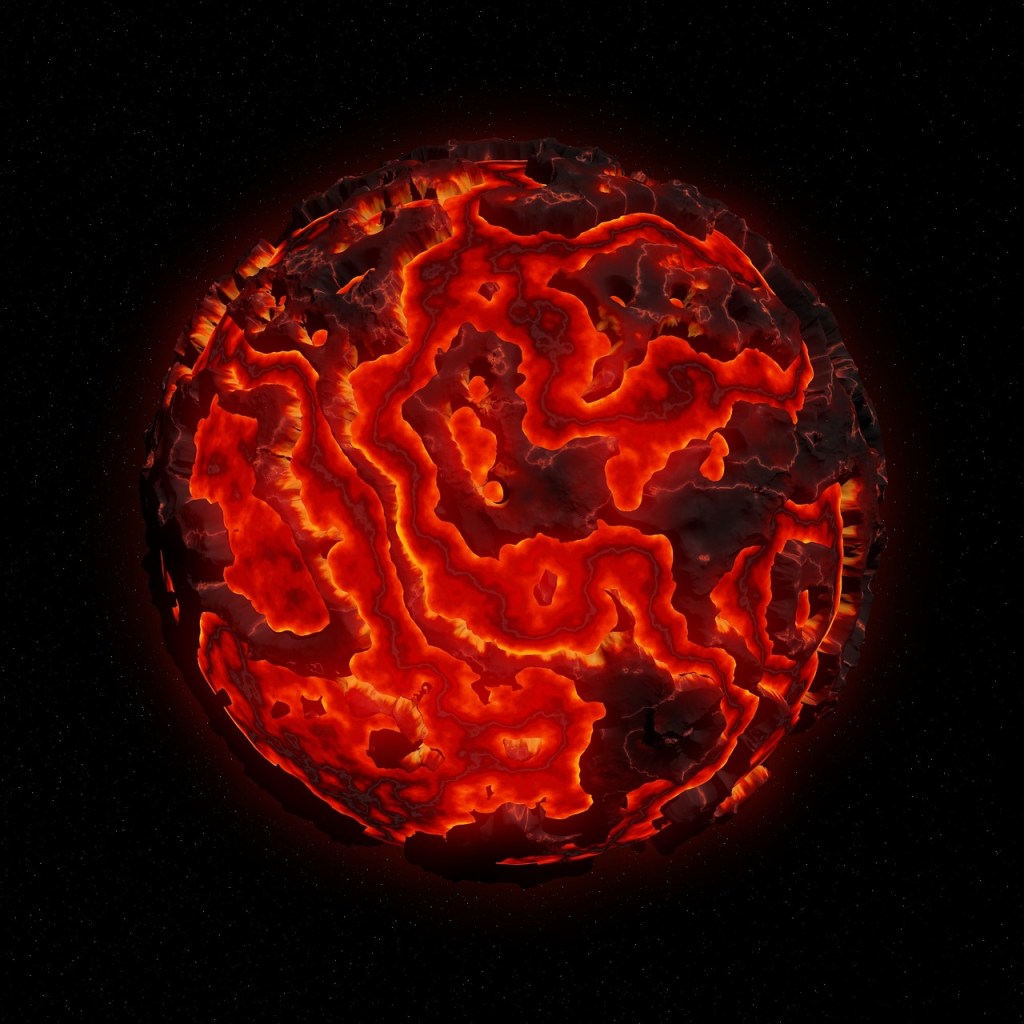
Ashbranded features a magic system built around controlling volcanic activity in its various forms through the “fuel” of emotions. As that fuel runs out, so do the emotions, leaving practitioners completely devoid of any feelings and to outside observers “soulless,” not in a spiritual sense, but certainly in any behavioral or practical sense.
Of course, having a magic system that affects the practitioners’ emotions isn’t new. There are plenty of magic systems that make mages more erratic as they use their powers or affect them in other ways. Similarly, emotion is usually seen as fueling magic to some extent, with more powerful emotions leading to more powerful magic. In the case of Ashbranded’s magic system, emotion is also a fuel, but the difference is that this fuel actually burns up and runs out, leaving the “vessel” empty of any emotion whatsoever.
Here’s how that magic system came about. I’ve wanted to write a story with volcanoes at the center for a long time. I’ve always been interested in volcanoes ever since I read the Magic Tree House book about Pompeii, and I’ve had other stories based around volcanic areas in the past. In this story, I wanted volcanoes to be central to the magic system.
As far as the emotional consequence aspect of the magic system, the inspiration was perhaps a lot stranger. I’ve got some chronic health issues, and as most people with those issues know, medication can be a huge blessing, but it’s also very hard to navigate. There are medications that may help me function or aid me in certain ways while also hurting me in others. Specifically, when I came up with the story, I had recently gotten off a medication that significantly effected my emotions. That got me thinking about how I could have a magic system based around the idea that magic is completely necessary for this people group to function in everyday society, but it also comes with some significant emotional consequences.
This means Ashbranded is basically a kind of allegory about the experiences I’ve had and is not depicting a character “losing his soul” in any spiritual sense, nor is it necessarily depicting characters turning evil of necessity. The magic system was meant to be more practical than mystical. The loss in this case is not the human spirit or even morality but is the loss of feelings and emotions, described in the analogy of “turning to ash.” This is shown in various aspects of the story when, despite lacking any feelings or emotion, certain characters are still alive and able to make moral judgments. They haven’t of necessity turned evil; they just have no emotions at all.
So the emotional drain of magic in Ashbranded became the basis of both the main story conflict and the name, with the ashbrand being the magical tattoo that shows how far a mage has gone down the path of “turning to ash.”
Choosing a main theme
The main theme of Ashbranded needed to directly flow out of the magic system, unlike in Loyalty Fallen, for which I tacked on the magic system rather than making it the center of the narrative.
I wanted to boil down the theme of Ashbranded to a single sentence: positive change is worth the sacrifice it requires. In the case of Ashbranded, change is desperately needed, as the society shown at the beginning of the book operates on a rigid caste system, with the ashbranded ruling over the so-called “ashdrains” with an iron fist. Intermarriage between the two groups is forbidden under threat of execution, and meanwhile, the volcanoes that are constantly being stirred up by magic are spewing ash into the surrounding villages and cities, poisoning thousands.
Unfortunately, anyone who steps up to try to make change happen will probably end up losing all their emotions and feeling and eventually turning to ash entirely, making it a costly and fearful endeavor. This, of course, is the main conflict of the story.
Writing a synopsis
According to Google’s AI results that keep showing up whenever I try to search something, “A story synopsis is a brief summary of a story’s plot, characters, themes, and ending. It’s often used to help literary agents and publishers decide if they want to represent or publish a book.” In other words, the synopsis spoils the main points of a story without wasting time on any extraneous material.
With that in mind, skip the rest of this blog post if you want to read my upcoming fantasy novel, Ashbranded, on December 1st without any spoilers. Otherwise, read on!
My process
When I sit down to write a synopsis for a novel, I usually have written copious notes on the project already. I have some idea of the themes I want to include, I already have the character roles figured out, and I have a basic idea of story progression from start to end. A synopsis won’t include extra content like campfire scenes or other slower moments, and it should only be 1-2 pages.
I personally take all the notes I have and go to ChatGPT to write the initial synposis. I will edit that synopsis later, but it saves me a lot of time and effort to get the early draft. ChatGPT already knows what a synopsis should look like, how it should be formatted, and what is necessary to include vs. what will be unnecessary even though it’s included in the notes. As a disclaimer, I do NOT write a single line of my novels with AI. I use it in the brainstorming and outlining process and in this case to make sense of my very scattered notes.
The initial result
For anyone who is interested, I’ve linked to the synopsis that ChatGPT gave me, with all the edits I made annotated.
My initial thoughts upon reading the synopsis was that many of the sentences were too long, which created some awkward and drawn-out parts, and that there were too many unnecessary hyphenated statements.
You can read the edited and finalized version below:
“In the volcanic city of Ashwind Cairn, the Ashbrands have the power to control ash, molten rock, and seismic forces. They live under the rule of a mysterious and immensely powerful mage, the High Volcaryn. Ashwind Cairn is built on a delicate balance, with the volcanic landscape providing both the Ashbrands’ source of strength and the ever-present threat of destruction. Beneath the surface, however, the Ashbranded society is rotting, plagued by a rigid caste system that favors mages and dehumanizes non-mages, known derogatorily as ashdrains.
Dare, a talented ashbinder and beast tamer, has no desire to involve himself in the politics of his people. Though his skill in manipulating ash has given him the ability to feel and track life in a way few ashbrands experience, he has chosen to live a relatively simple life. He lives with his guardian and foster brother, both of whom are ashdrains and looked down upon by society. Haunted by the belief that his parents’ mysterious deaths were caused by overusing their magic, Dare limits his own magical use, content to avoid the cost that greater power demands.
When an assassination attempt on the High Volcaryn fails, she shocks the city by announcing her intention to choose a successor. She summons the protagonist and reveals that she has chosen him to inherit her title and power. She sees in him a spiritual successor—one who, like her, can “see” through the ash. However, the price for this power is steep: he must first master the other forms of Ashbrand magic, which will permanently drain him of all emotions, and then kill her to take her place.
Unwilling to kill the Volcaryn or disrupt the delicate balance of Ashwind Cairn, the protagonist rejects the offer and attempts to leave the city. He is quickly confronted by the very assassin who tried to kill the High Volcaryn. In their battle, the protagonist defeats the assassin but spares her life, sending a message to her superiors that he has no interest in the Volcaryn’s throne. Still, the High Volcaryn’s second-in-command, a manipulative figure who craves power, begins plotting against both the protagonist and the Volcaryn herself.
Despite the protagonist’s attempts to escape his fate, danger comes to Ashwind Cairn. The Ashbrands are accused of murdering a high-ranking official in a nearby nation, and for the first time in their history, they face the threat of an external war. Forced by circumstances and his own growing sense of responsibility, the protagonist returns to Ashwind Cairn and begins his reluctant training under the High Volcaryn, preparing to take her place.
As the protagonist’s power grows, so too does the toll on his emotions. The intense training begins to burn away his Ashbrand, and with it, his humanity. He becomes colder, more isolated, and detached from the people he cares about, particularly his guardian and foster brother. Though he believes the war is the result of outside manipulation, he is determined to stop it by becoming High Volcaryn.
After completing his training, the protagonist confronts the High Volcaryn in a battle for leadership, but he is soundly defeated. Left severely wounded and on the brink of death, in his weakened state, the protagonist learns the devastating truth: it was the High Volcaryn herself who started the war, orchestrating the conflict to unite their people by creating an external enemy. This revelation shatters the protagonist’s belief in the Volcaryn and leaves him drained and bitter.
In the depths of doubt and despair, Dare contemplates giving up. But everything changes when he discovers the truth about his parents’ deaths from his guardian. They were killed while trying to overthrow the Volcaryn and save an ashbranded-ashdrain couple from execution. While talking to his guardian, he is betrayed by the second-in-command, who sees this as an opportunity to seize power. As the second-in-command prepares to kill Dare, his guardian sacrifices herself to protect him. The revelation, along with his guardian’s and foster brother’s willingness to sacrifice themselves, force Dare to confront his fears. He finally accepts that positive change is worth the cost, even if that cost is steep.
With the help of the assassin, the protagonist launches a final, desperate assault on the High Volcaryn. In the ensuing battle, Dare ultimately defeats the Volcaryn, but nearly dies in the attempt. In her final act, the Volcaryn approves of his strength and transfers what remains of her unburned energies to him, revitalizing his Ashbrand. Though his soul is still scarred, he now possesses the power to lead.
Taking up the mantle of High Volcaryn, Dare chooses a path of compromise rather than war. He negotiates a treaty with the enemies of the Cairn, admitting the guilt of the Ashbrands and offering costly goods in exchange for peace and increased trade. Though this decision leaves many questioning whether it will ultimately lead to the downfall of the Ashbranded society, the protagonist understands that peace today is worth the risk of war in the future. By the end of the story, Dare has undergone a profound transformation. Once unwilling to challenge the status quo or pay the cost for change, he now realizes that positive change requires sacrifice. He accepts the responsibility of leadership, knowing that his decisions will shape the future of the Ashbranded people, for better or worse.”
The synopsis covers the main story beats and themes so whoever reads the synopsis has a clear idea of how the story gets from beginning to end and the most important points along the way.
Final thoughts
If you want more info on writing a synopsis and outline for NaNoWriMo, I suggest checking out Abbie Emmons YouTube channel.
Assuming I can meet my NaNoWriMo goals, you’ll be able to read the novel in its entirety on December 1st for free. I’ll be giving regular updates on my progress. Until then, enjoy Loyalty Fallen, and see you next week for the full magic system of Ashbranded!
 Loyalty Fallen Hub
Leave a comment