As always, the latest chapter of Loyalty Fallen is available for you to read here. If you haven’t started reading yet, take a look at this short video to decide if you might be interested in the novel.
Today’s blog post is about how you can set and track realistic writing goals. Before you start, if you’ve been enjoying the latest content, please subscribe. It helps me out a lot.
Making goals realistic
When you sit down to make goals for your writing, you first have to ask yourself a few questions.
- Why am I writing?
- What do I want to write?
- How fast do I write / what is a realistic timeline for my chosen projects?
- How will I hold myself accountable or reward myself?
- What motivates me to write?
Let’s go over these questions one by one. The first question is important because it gets to the heart of what you want to accomplish with your goals. Do you want to get a full-length novel published? If so, you’ll want a pretty high word count goal. Five thousand words a month would allow you to write the first draft of a novel in a year. Do you want to write for fun but also improve little by little? Maybe keep it to a sentence per day or even per week. Do you just want to see if writing is something you might enjoy? Try a reasonable goal like a couple sentences per day.
The second question is equally important. If you’re writing a full-length novel, you’re going to need to choose a very different timeline compared to a short story or some poetry. While it’s true that some people can write the first draft of a novel within a month, for the most part, you’ll want to give yourself plenty of time to edit and work through any issues in your writing.
If you have a high typing speed or you have a lot of time to write, that will also affect your expected timelines to complete your projects. I write 100+ words per minute, which I believe is one of the biggest reasons I’ve been able to write so much in such a short time. If you do have a very low typing speed, you may want to practice to raise it first through something like typing.com.
As for the fourth question, not everyone can accomplish their goals alone. Some people (myself included) need a little help to stay on track, so planning ahead of time how you’ll either reward yourself or keep yourself accountable can be extremely helpful. During National Novel Writing Month, I completed 84k words, and I was rewarding myself for milestones along the way while also tracking my word count in multiple ways.
The last question is closely related to the fourth. You can’t set up an effective reward and accountability process for your writing until you understand what rewards will motivate you to meet your goals. Similarly, some people find forums extremely distracting, while others find them to be useful motivators. Spend some time exploring what works for you.
Once you’ve made a realistic goal, you’re ready to start tracking.
Tracking your writing goals
Here are some of the top apps and methods I use to maintain my goals.
1. Google Workspace
If you’re not familiar with Google workspace, it encompasses various apps like Google Calendar, Gmail, Google Docs, and Google Drive. I’ll focus on two of those here.
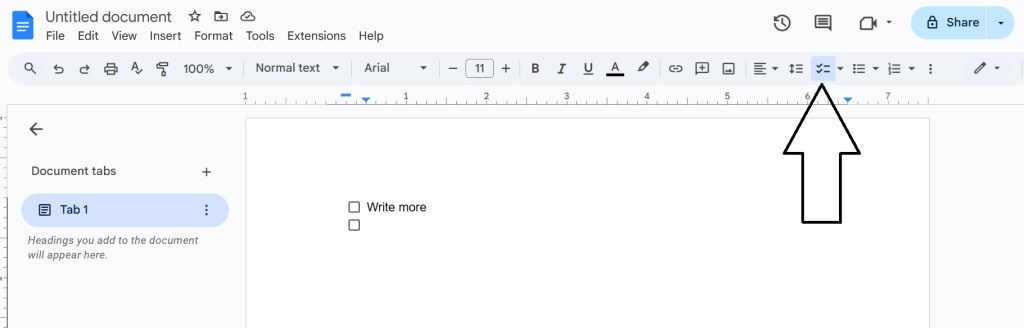
The first is Google Docs. When you start a new novel or story, you can set goals right within the first page of that document using a feature called checklist (see the image below). All you need to do is click the little checkmarks shown in the top right corner of the screen, and you can start writing your list of tasks. Check each one off by clicking on the little box next to it as you achieve it.
Another way to track goals is within Google Calendar. Head over to the app and simply click anywhere on the calendar to create a new event, then click “task” on the popup screen as shown in the image below. You can change the date and time afterwards if need be. Click on the “does not repeat” drop down to select how often you want the task to repeat. You can create a task to write a certain amount of words each day, for example.

Google Calendar will even give you notifications to make sure you complete the task.
2. TrackBear
TrackBear is a simple word-tracking app. You can track word count for each project individually or create leader boards to compete with other people. The interface is easy to understand and use, and this is one of my personal favorites, particularly for National Novel Writing Month.

3. Forums
For me personally, forums are the most effective way of both tracking and motivating myself to achieve my goals. I use mythicscribes.com, but you can also do this on various subreddits as shown below.
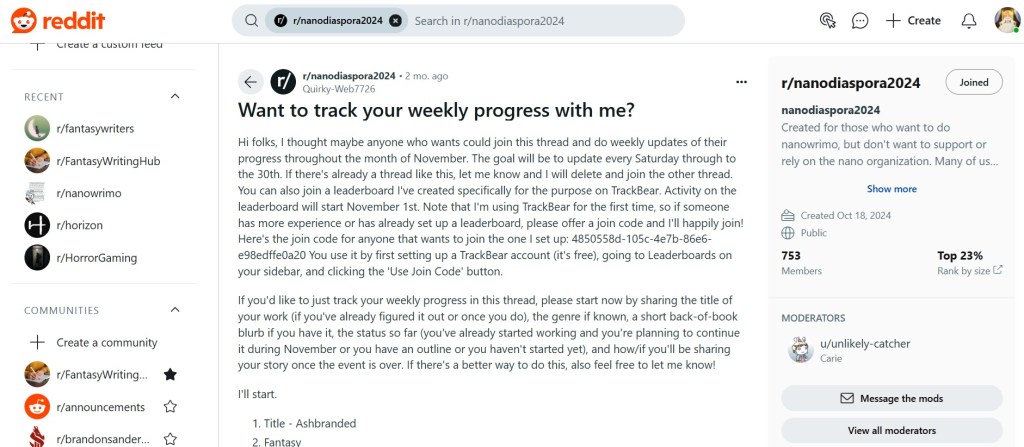
On MythicScribes, I’ve been setting writing goals each month along with other writers and then providing updates on how far I’ve gotten towards reaching those goals. It’s been very rewarding and fun, and there has been a surprising amount of participation.
4. Discord
While I personally don’t find Discord to be very user friendly and I only started trying this recently, some people really enjoy making their way through challenges with other people on the app. They can join writing sprints and update each other on progress or ask questions. These kinds of groups aren’t always easy to find, but if you’re part of a forum or you’re active on Reddit, you can always make a thread to specifically ask about them, or you can set one up yourself.
5. Productivity apps
Some types of productivity apps reward you for meeting your goals. This kind of gamified productivity can be a lot of fun. For example, 4theWords is a writing-specific gamification app. Alternatively, apps like Finch can let you set goals of any kind, track your progress on those goals, and get rewards for meeting them.
Final thoughts
Sometimes, you may set goals but not be able to meet them. Maybe you become ill or you just lose motivation. The important thing is that you keep setting new goals and moving ahead in your writing. Next week’s blog post will talk about another great motivator, which is writing contests.
Until then, please like this post and subscribe, and above all, enjoy Loyalty Fallen!
 Loyalty Fallen Hub